When a tornado warning sounds, you have minutes to act. If you live in Harvest, you know severe weather is part of life, and many homes sit on slabs without basements. A well designed safe room gives you and your family a reliable place to shelter when it matters most. In this guide, you’ll learn how to plan, permit, and build a safe room that fits your Harvest home, your budget, and recognized safety standards. Let’s dive in.
Why a safe room in Harvest
North Alabama experiences frequent severe storms and tornadoes, with peak seasons in spring and a secondary season in late fall. NWS Huntsville’s tornado climatology reflects that long history. Local officials urge sheltering on the lowest interior level, which is why above‑ground safe rooms or garage units are common choices for slab homes.
A safe room built to recognized criteria can withstand extreme winds and impacts that typical interior rooms cannot. That means you get a defined space engineered for pressure, uplift, and windborne debris rather than a best available room.
Know the standards that keep you safe
FEMA’s residential guidance in P‑320 and the broader criteria in P‑361 outline what makes a safe room truly protective. You can download both from FEMA’s safe room resource page. Designers also use ICC 500, the national standard for storm shelters that sets wind, impact, and testing requirements. For an overview, see the ICC 500 explainer.
In practice, your design professional will align FEMA P‑361 and ICC 500, then address any site issues covered by local building codes. When in doubt, the most conservative criteria typically apply.
Choose the right safe room type
Above‑ground, site‑built room
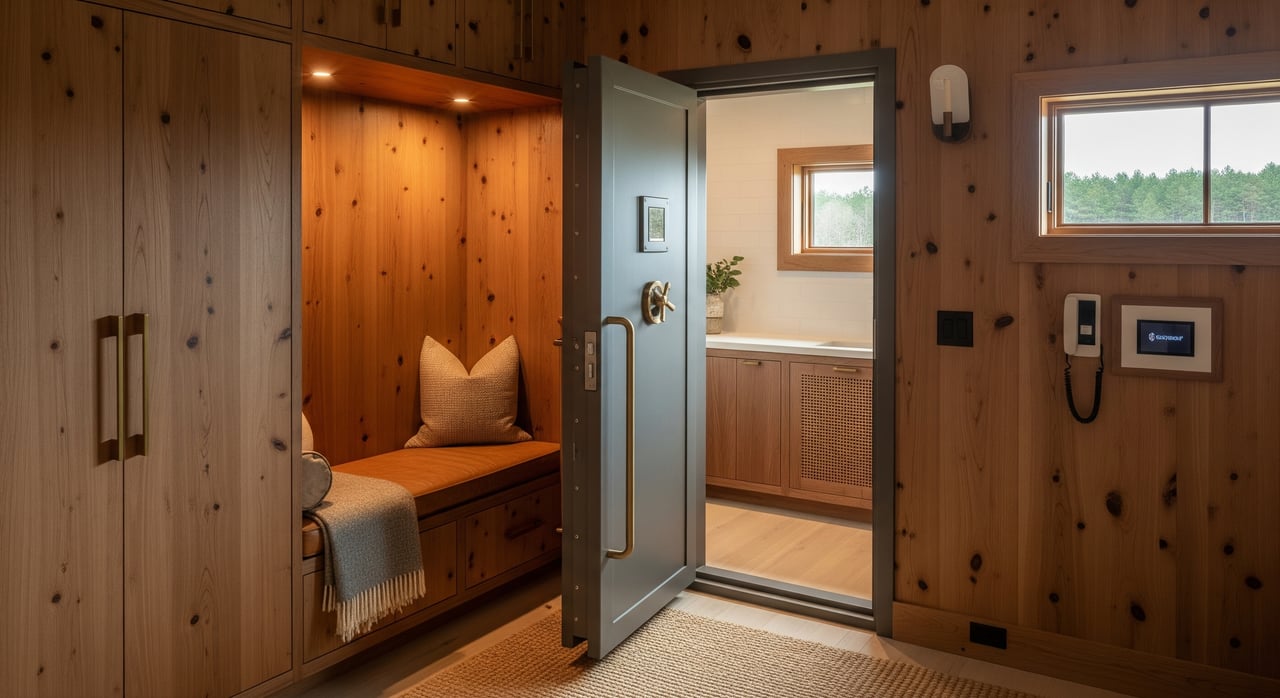
This is a common retrofit for Harvest’s slab‑on‑grade homes. It can be built inside a closet, bathroom, hallway, or garage. The structure must meet ICC 500 criteria with proper anchoring, impact‑resistant walls and roof, and a tested door assembly, as outlined in FEMA’s safe room resources.
Prefabricated steel or modular unit
These install quickly and often sit in a garage or on a slab. They still require proper anchoring and, in most cases, a building permit. Prefab units can be a practical option when space is tight and schedules are short.
Below‑grade or basement room
Below‑grade protection is excellent where basements exist, but you must evaluate flood risk and groundwater. Safe rooms in flood hazard areas have additional design rules that may limit below‑grade options.
Best location and siting
Place your safe room on the lowest level and in an interior spot with no windows. Garages are often ideal for prefab or site‑built rooms if designed correctly. If you are near a mapped flood zone, verify your status through the FEMA Flood Map Service Center before choosing any below‑grade option.
For stand‑alone exterior shelters, ensure clear, quick access from the home and follow siting guidance in FEMA P‑361.
Build for the details that matter
Structure and anchoring
Your safe room must resist wind pressure, uplift, sliding, overturning, and debris impact. Slabs supporting the room should meet concrete code requirements, and post‑installed anchors may require special inspection. See an overview of anchoring considerations in this foundation and anchoring brief.
Doors and openings
The door is often the most critical and costly component. Use a tested and labeled assembly that meets the applicable standard, and make sure it opens from the inside without keys. FEMA highlights safe‑room door requirements and common questions in its safe room FAQs.
Ventilation and power
Tornado safe rooms may use passive vents or mechanical ventilation. When mechanical systems are used, FEMA commonly applies about 5 cfm per person and recommends standby power for ventilation and lighting. You can review ventilation guidance summarized in FEMA P‑361.
Space and accessibility
Size the room for your household and any accessibility needs. FEMA guidance offers occupant area minimums and notes additional space for wheelchairs or durable medical equipment. Plan simple seating and a layout that allows everyone to shelter comfortably for the event duration.
Permits, inspections, and registration in Madison County
Harvest sits in unincorporated Madison County, so your permits and inspections run through the county. A permit is required for work that alters structural, foundation, electrical, mechanical, or plumbing systems. Start by contacting Madison County Building & Inspection to confirm current code editions, permit documents, and contractor licensing.
After installation, register your private shelter so first responders know its location in an emergency. Use the Huntsville‑Madison County registry via the county’s storm shelter registration page.
Costs and funding at a glance
FEMA’s recent guidance shows new‑build site‑built safe rooms around 8 by 8 feet often estimate near 9,400 to 13,100 dollars, and about 18,900 to 25,500 dollars for a 14 by 14 room. Prefabricated residential units can start near 5,000 to 6,000 dollars for the unit alone, with installation and a tested door adding to the total. See FEMA’s consumer‑focused safe room FAQs for context. Actual costs vary by size, materials, and local labor.
Funding for individual homeowners typically flows through state or local programs that use federal mitigation grants. Connect with Alabama Emergency Management or Madison County emergency management to ask about any active programs.
Step‑by‑step plan for your Harvest home
- Check your parcel’s flood status through the FEMA Flood Map Service Center.
- Call Madison County Building & Inspection to confirm permits, inspections, and whether any special inspections apply for anchors.
- Decide on type and location: retrofit an interior room, place a unit in the garage, or consider below‑grade only after verifying flood and groundwater conditions.
- Engage a licensed engineer or architect familiar with FEMA P‑320, FEMA P‑361, and ICC 500 to produce drawings and specify the door, anchoring, and ventilation.
- Get multiple written bids from experienced contractors, and request product test data for any manufactured shelter or door.
- Stock the room with basics: water, first aid, flashlight or lanterns, battery or crank radio, spare phone batteries, a whistle, and essential medications. Register the shelter using the county’s storm shelter registry.
Owning a safe room and resale
Many buyers value the peace of mind a tested shelter provides, and some industry sources note improved marketability. Standard homeowner policies do not always reduce premiums because of a safe room. For a plain‑English overview of what makes a safe room effective, review this safe room explainer.
Bring it all together
A safe room turns preparation into confidence. When it meets recognized standards, is properly permitted, and sits in the right spot, it can protect what matters most during Huntsville‑area storms. If you are planning a move or a remodel and want to weigh safe‑room options in your search, reach out to Stallworth Real Estate, LLC for local guidance that fits your goals.
FAQs
Do I need a permit for a safe room in Harvest, AL?
- Yes. Madison County requires permits for work that alters structural, foundation, electrical, mechanical, or plumbing systems. Start with the county’s Building & Inspection office.
Which is safer in Harvest, above‑ground or below‑grade?
- Both can be protective when designed to FEMA P‑361 and ICC 500. Below‑grade is strong where basements exist, but check flood risk first using the FEMA Flood Map Service Center.
How large should a residential safe room be for my family?
- Size depends on household count and any accessibility needs. FEMA guidance provides minimum area per person and notes extra space for wheelchairs or medical equipment.
What ventilation and power do I need inside a tornado safe room?
- Use passive vents or a mechanical system sized to code. FEMA commonly applies about 5 cfm per person for mechanical ventilation and recommends standby power for ventilation and lighting, as summarized in FEMA P‑361.
How do I register my private storm shelter in Madison County?
- After installation, add it to the local registry so first responders know its location by using the county’s storm shelter registration form.