If a builder announces 350 new homes in a single subdivision, what should happen to the price of the existing house three streets over? Basic supply and demand says more inventory should soften prices, or at least slow their climb. That is the story most buyers walk into Meridianville expecting to hear.
It is not the story the data tells.
Lennar opened The Reserve at The Retreat in Meridianville on July 24, 2026, a 350-home community with entry pricing in the mid-$200,000s and USDA-eligible financing built specifically to reach first-time buyers. It is one of at least four active builder communities going up in Meridianville right now, alongside hundreds of homes under construction in Walker's Hill, Colonial Pointe, and Parkside. That is a lot of new supply landing in one place at once. And yet Meridianville's home prices have been appreciating faster over the past year than the broader Huntsville metro average, not slower. Understanding why matters more than the median price itself if you are trying to time a purchase here, price a listing correctly, or figure out whether the new-construction wave is a bargaining chip or a red herring.
What's Actually Under Construction Right Now
Meridianville's builder pipeline is not one project. It is several running in parallel:
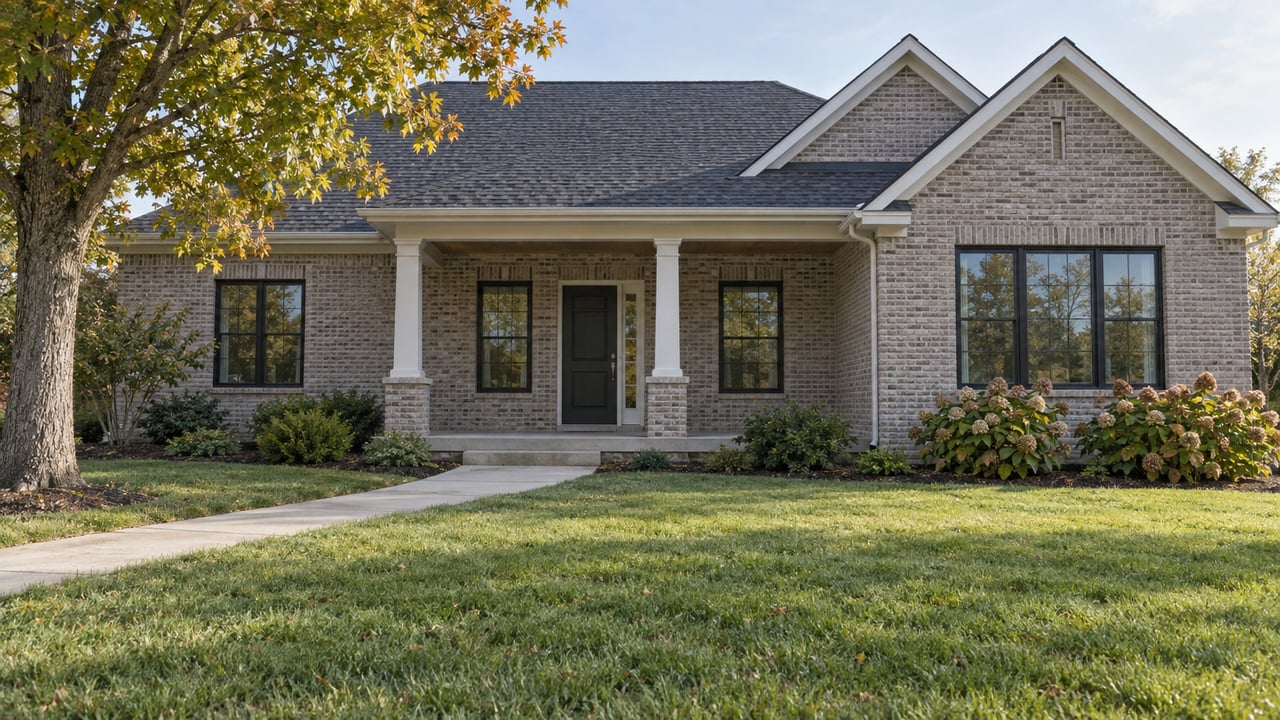
- The Reserve at The Retreat (Lennar) at 114 Apricate Lane: 350 planned homes, seven floor plans from 1,355 to 2,065 square feet, three to four bedrooms, pricing from the mid-$200,000s, with a pool planned for next year.
- Walker's Hill: energy-efficient single-family homes including ranch and two-story plans, several under construction with spring and fall 2026 completion dates.
- Colonial Pointe: large-lot new construction marketed on proximity to Research Park, roughly 15 minutes from downtown Huntsville.
- Parkside: split-plan new construction, part of the same wave of builder activity going up just outside the Huntsville city limits.
That is a genuine wave of new supply hitting a town whose population grew from 7,520 residents at the 2020 census to an estimated 11,248 in 2026, a jump of nearly 50 percent in six years. Ordinarily, that much simultaneous building would be the kind of thing that gives buyers leverage. Here, it has not worked out that way, and the reason is the second half of the story.
The Appreciation Number That Doesn't Fit the Supply Story
According to a Huntsville-area market dashboard tracking trailing 12-month price movement by submarket, Meridianville home values rose 3.8 percent over the past year, alongside similar gains in Hazel Green (4.5 percent) and Harvest (4.1 percent). All three outpaced the broader Huntsville metro average for the same period. The dashboard's own explanation is straightforward: these are the more affordable submarkets, and buyers who have been priced out of Madison and southeast Huntsville are moving north to find a home they can still afford. Meanwhile, the higher-end Huntsville neighborhoods above roughly $550,000 barely moved at all over the same period.
That is the mechanism worth sitting with. The new homes at The Reserve at The Retreat and elsewhere are not landing into a market with flat or falling demand. They are landing into a market where demand is actively growing faster than the metro around it, fed by buyers who have already been squeezed out of pricier zip codes closer to Huntsville's core. That combination can help explain why a building boom coincides with rising prices instead of falling ones.
Huntsville's own median sale price reached $338,900 in June 2026, up 1.6 percent from the same month a year earlier, with sales volume up 27 percent year over year. Set Lennar's mid-$200,000s entry pricing against that number and the appeal for a first-time buyer becomes obvious. It is not that Meridianville is cheap in absolute terms. It is that it remains one of the few paths into the Huntsville job market, which has been reinforced by continued hiring around Redstone Arsenal and the relocation of Space Command's headquarters, at a price point new construction elsewhere in the metro simply cannot match anymore.
Why the "Days on Market" Numbers You'll See Won't Agree
If you start comparing portals, you'll notice the days-on-market figures for Meridianville do not line up with each other, and the gap is too large to be rounding error. One major aggregator's July 2026 snapshot puts the median at 66 days. Another puts the same month at 124 to 125 days, describing it as unchanged from a year earlier. A third platform's own market-trends page lists 74 days for a snapshot with a different active inventory count entirely.
This is not a data error you should try to resolve by picking whichever number sounds best. It reflects something real about how Meridianville's inventory is built. The market here is a blend of fast-moving resale homes and new-construction spec homes that can sit listed for months while a builder works through site prep, financing incentives, and phased releases, and different platforms handle that blended inventory differently depending on when they start the clock and whether a price change or plan swap resets it. A homebuyer comparing Meridianville to, say, the Huntsville metro's overall median of 38 days as of April 2026, should treat any single days-on-market figure they see on a listing site as a rough signal, not a precise one, and ask their agent to pull the actual comparable sales for the specific subdivision and price band they're considering rather than relying on a citywide average.
What This Means Depending on Which Side of the Table You're On
If you're a first-time buyer priced out of Madison or southeast Huntsville, the math behind Meridianville's new construction is working in your favor for now, but the appreciation data suggests that window is not permanent. A submarket appreciating faster than its metro because of spillover demand tends to keep appreciating until the price gap that created the spillover narrows. Buying into new construction here now, particularly with USDA-eligible financing on a home priced in the mid-$200,000s, is buying ahead of that convergence rather than after it.
If you're relocating for a job tied to Redstone Arsenal or the broader defense and aerospace corridor, the calculus is similar but the timeline matters more. Military and government transfers often operate on compressed schedules, and a subdivision still selling new-construction phases, like Walker's Hill or The Reserve at The Retreat, can offer more predictable move-in dates than competing for a resale listing that may or may not still be available by the time orders finalize.
If you're an investor evaluating a small rental or a land purchase, the appreciation gap between Meridianville and the pricier Huntsville submarkets is the number to track quarter over quarter, not the median price in isolation. A submarket appreciating faster than its metro because of affordability spillover is a different investment thesis than one appreciating because of scarcity, and the exit strategy for each looks different five years out.
A Few Questions Worth Answering Directly
Does more new construction in Meridianville mean I have more room to negotiate on price? Not automatically. The appreciation data shows demand growing faster than the metro average even as hundreds of new homes come online, which is the opposite of the oversupply condition that typically hands buyers leverage. Negotiating room here comes from comparing a specific subdivision's recent closed sales, not from assuming volume of construction equals bargaining power.
Why do days-on-market figures for Meridianville vary so much between sites? The inventory mixes fast-selling resale homes with new-construction spec homes that can sit listed for extended periods during site work and phased releases, and different listing platforms start and reset that clock differently. Treat any single number as directional rather than exact.
Is Meridianville still more affordable than Madison or southeast Huntsville? Yes, based on the current builder pricing and the metro-level median for June 2026, though the gap is part of why demand and appreciation here have been stronger than the metro average over the past year.
If you are weighing new construction against resale in Meridianville, or trying to figure out what a specific subdivision's recent closings actually support as a fair offer, that is exactly the kind of comparison worth doing before you write an offer, not after. James Stallworth has been tracking these North Alabama submarkets closely. Let's Connect, and start with a free home valuation to see where your numbers actually land.
This article is general information, not legal, tax or financial advice. Consult a qualified professional about your situation.