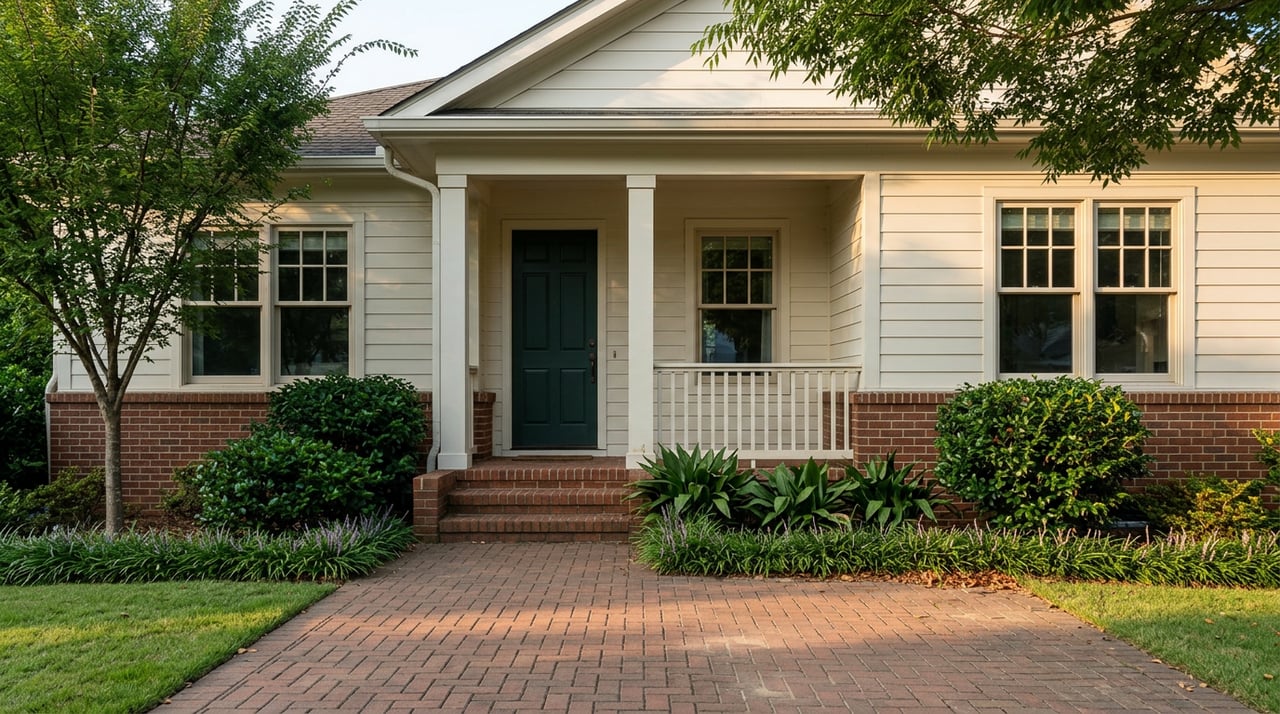
You've made an offer on a Craftsman bungalow near Delano Park, or a Victorian on Sherman Street, and it's accepted. You start planning. New porch railing, maybe a fence along the side yard, definitely those windows that stick every summer. Then you learn that in Old Decatur and Albany, none of that starts with a contractor. It starts with a form, a city meeting, and a wait.
That surprise catches a lot of buyers after closing, when it's too expensive to walk away and too late to plan around. It shouldn't. The rule has been public for decades, and knowing it before you write an offer changes how you shop, how you budget, and how fast you can actually move into the version of the house you pictured.
Two Districts, One Extra Signature
Old Decatur and Albany are Decatur's two historic neighborhoods, both listed on the National Register of Historic Places and both, separately, designated as locally zoned historic overlay districts. That second designation is the one that matters for a buyer. A National Register listing is mostly symbolic. A local overlay district means the City of Decatur's Architectural Review Board has to sign off on exterior work before you touch it.
The Architectural Review Board is a five-member board tasked with reviewing permits for construction and demolition inside the two districts, from fences and additions to new construction. It meets monthly in council chambers at City Hall, and a Certificate of Appropriateness has to be submitted at least fourteen days ahead of that meeting. Routine maintenance like roof replacement or rear fence repair can often be handled by city staff on a faster track, but anything that changes what the house looks like from the street goes in front of the board.
Here's the part that surprises people who've never shopped in these neighborhoods: the boundary lines aren't neat. A house can sit on the regulated side of a street while the one across from it sits just outside the platted historic district. Buyers touring both in the same afternoon sometimes don't realize they're on opposite sides of that line until an agent or a listing note points it out. If you're serious about a house in either district, the first call worth making isn't to a contractor. It's to the city's Community Development Department, to confirm which side of that line your specific parcel falls on.
The Tax Credit You've Probably Heard About Doesn't Apply to You
According to Decatur Downtown, Alabama does have a historic rehabilitation tax credit, and it's genuinely generous: a 25 percent refundable state credit on top of a 20 percent federal credit, which can return close to 45 percent of eligible rehab costs on a qualifying project. It's the kind of number that gets repeated in real estate conversations around Old Decatur and Albany as a reason the extra paperwork is worth it.
Here's what usually doesn't get repeated: Alabama Trust for Historic Preservation says owner-occupied primary and secondary residences have been ineligible for that state credit since 2023. It's now reserved for income-producing property. The Alabama Historical Commission explains that the federal credit was never available to homeowners in the first place, since it also requires the building to generate income after rehabilitation. Alabama's property tax break tied to historic status is real too, but it only benefits income-producing buildings, because owner-occupied homes are already assessed at the lowest residential tax class regardless of historic designation.
In plain terms, if you're buying a house in Old Decatur or Albany to live in, the review board's approval requirement is real, but the tax incentive that supposedly offsets the trouble mostly isn't available to you. The city's historic preservation specialist, Caroline Swope, offers free help connecting property owners with whatever incentives do apply, and that conversation is worth having before you renovate. Just go in knowing the biggest number on paper is aimed at investors and landlords, not the family moving into the house next month.
The Rest of Decatur Is Slowing Down. These Two Neighborhoods Aren't.
Decatur's broader housing market gave buyers more room in 2026 than it had the year before. Over the three months ending in April 2026, the median sale price across the city was $240,000, down 3.1 percent from the same period a year earlier, and homes were taking an average of 84 days to sell, up from 55 days the year before. As of August 2026, the citywide median list price sat at $269,000, flat compared to both the prior month and the prior year. That's a market cooling in the ordinary way markets cool: more time on shelf, softer prices, a little more leverage for whoever's writing the offer.
Old Decatur and Albany aren't following that pattern, and the reason has nothing to do with charm. As of this summer, there were only four homes actively listed inside Decatur's historic district boundary, with a median list price of $288,000, above even the citywide August figure. When an entire submarket has four listings citywide, a handful of interested buyers is enough to keep pricing firm no matter what the rest of the city is doing.
That scarcity is structural, not seasonal. Old Decatur was platted in 1821 and Albany, originally an entirely separate town called New Decatur, was platted in 1887. Nobody is building new inventory inside those boundaries. Every Victorian on Line or Ferry Street and every Craftsman near Sherman or Jackson Street is a house that already exists, in a footprint the city fixed generations ago. When Decatur's citywide market slows because buyers pull back or rates bite, that slowdown shows up in neighborhoods where builders can still respond with new supply. It doesn't show up in a district where the supply was locked in before your grandparents were born.
| Citywide Decatur | Old Decatur / Albany historic district | |
|---|---|---|
| Median price | $240,000 (sale, 3 mo. ending Apr. 2026) / $269,000 (list, Aug. 2026) | $288,000 (current active listings) |
| Days on market | 84, up from 55 a year earlier | Limited data, but only 4 homes listed |
| Supply response to demand | New construction and turnover across the city | Fixed by 19th-century platting; can't expand |
What This Means If You're Already Under Contract
If you're closing on a house in one of these districts, the practical move is to plan your first exterior project around the board's calendar, not your own. Know the meeting date, get your Certificate of Appropriateness application in fourteen days ahead, and if your project is something simple like roof repair or a rear fence, ask the city whether it qualifies for staff-level fast tracking instead of a full board review. That single question can be the difference between a two-week turnaround and a two-month one.
If you're still shopping, treat the historic district boundary as a line item on your due diligence list, the same way you'd treat a flood zone or an HOA. Two houses that look identical from the sidewalk can carry very different renovation timelines depending on which side of a platted street line they sit on. And if the tax credit is part of your math for making the numbers work, confirm with the Alabama Historical Commission whether your specific plan, owner-occupied or income-producing, actually qualifies before you count on it.
None of this makes Old Decatur or Albany a harder place to recommend. It makes them a place where the paperwork is part of the value, not a tax on it. Buyers are still paying a premium for a fixed, non-replicable supply of century-old houses walking distance from Delano Park and Bank Street. They're just paying it with time as much as money.
A Few Questions Worth Asking Before You Tour
Does every house in Old Decatur or Albany require board approval for exterior work? The answer depends on the specific parcel. Confirm its status with the city before assuming either way.
How long does board approval actually take? The Architectural Review Board meets monthly, and applications are due fourteen days before that meeting. Routine repairs can sometimes skip the board entirely through staff-level fast tracking. Larger projects, additions, or new construction go through the full monthly cycle.
Can I still get a tax break for renovating a historic home I plan to live in? The state's 25 percent rehabilitation credit and the related property tax reduction are currently limited to income-producing properties, not owner-occupied homes. If you're buying to live in the house, don't build that credit into your renovation budget without confirming eligibility first.
If you're weighing a house in Old Decatur, Albany, or anywhere else in the Decatur market and want a straight answer about what a specific address actually requires before you commit, that's exactly the kind of question Stallworth Real Estate is built to answer. Let's Connect, and start with a free home valuation before you write the offer, not after.
This article is general information, not legal, tax or financial advice. Consult a qualified professional about your situation.